Effective communication with your children is very important for your child's psychological development. Strong interaction with your children will help reduce problems or help you find solutions together when problems arise. Your child will feel understood and accepted by you. There are many ways to improve effective communication with your child.
Some of these ways are:
- The first involves using certain effective phrases when speaking with your child. Examples include “I want to hear about it, I'm interested in what you're saying, Would you like to talk about it, I want to hear what you have to say, I'm listening, This seems important to you, I care about you, I want to know how you feel”. The message these phrases are intended to convey is that you accept your child and care about what they say. These phrases will encourage your child to communicate more with you.
- The second way to improve effective communication is active listening. Here is an example of active listening. Your child comes to you crying and says that a friend has taken their toy. Here, instead of saying that they should not cry about it, saying “You're upset. You really didn't like having your toy taken away” is a way of responding that shows you understand how much the issue matters to them and how they feel. When your child cannot yet speak, carefully assessing what they are experiencing and responding appropriately to their needs is also active listening. For example, imagine that your child, who cannot yet speak, has lost their toy. This might involve recognising that they are crying because they have lost their toy and saying, “You're crying because you've lost your toy; let's look for it together”.
- The language you use matters if you want your children to listen to you. When speaking with your child, take care not to blame, immediately try to offer advice, judge or mock them. Avoid giving your child orders. This can cause the child to fear their parents' power. Consistently using “you” statements when responding to a situation will damage communication between you. For example, you do not want your child to jump on the sofa, and you may unintentionally find yourself saying things that target them directly, such as “you're being very naughty (‘you’ statement = you are naughty), you can't jump here, get down from there right now”. These statements may cause the child to become defensive immediately and continue the behaviour even more. In such a situation, you can try speaking from your own perspective rather than focusing on the child. For example, “I don't want you to jump on the sofa, but I can let you jump on the floor”. This will help convey the message that you are giving your child the freedom to jump while keeping the situation under your guidance.
- Focusing only on negative things is one of the mistakes that disrupt effective communication with children. Giving feedback on your child's positive behaviour and words will improve your communication. For example, your child is upset and crying because they have to stop playing with a friend and you need to go home. At this point, you might start with something positive, saying, “It's lovely that you're having so much fun with your friend, and you're sad to leave them, but I think we need to go home now”, or acknowledge your child's efforts (for example, “You worked very hard to finish this puzzle”).
- To keep communication with your child effective, you can change unacceptable behaviour by changing the environment. There are many ways to do this. For example, before bedtime, put away games and toys that might attract your child's attention and disrupt your bedtime routine, create a dedicated wall space for a child who keeps trying to draw on the walls (such as fitting a special covering on a wall in their room and allowing them to draw only on that wall, or giving them huge sheets of paper that feel as large as a wall), or give them clothes that are easy to put on if they want to dress themselves. In these situations, the aim is to offer alternatives when you feel that the things your child wants to do are disrupting their communication with you. If you feel something is a definite no, say no. Show your child that you can compromise on everything else and that you allow them freedom.
- To resolve conflicts with your child, try to find an approach that works for both of you. The best part of effective communication is being able to solve problems with your child together. For example, you notice that your child does not want to go to preschool and is crying and making a fuss because of it. Talk to them about this. Instead of asking directly why they do not want to go to school (do not focus on the negative), talk about school. Reflect their feelings back to them. (For example, “You're feeling sad because you're going to leave me and go to school”.) Then, once you have identified the source of the problem, tell them that school matters a lot to you and ask how you can find a way for both of you to be happy. You could offer options such as explaining that you have to go to work but promising to try to pick them up at the same time every day and to play together at home. You can also ask them what else you could do.
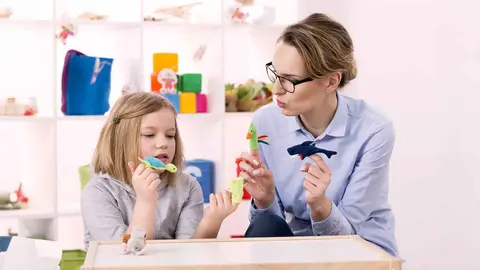
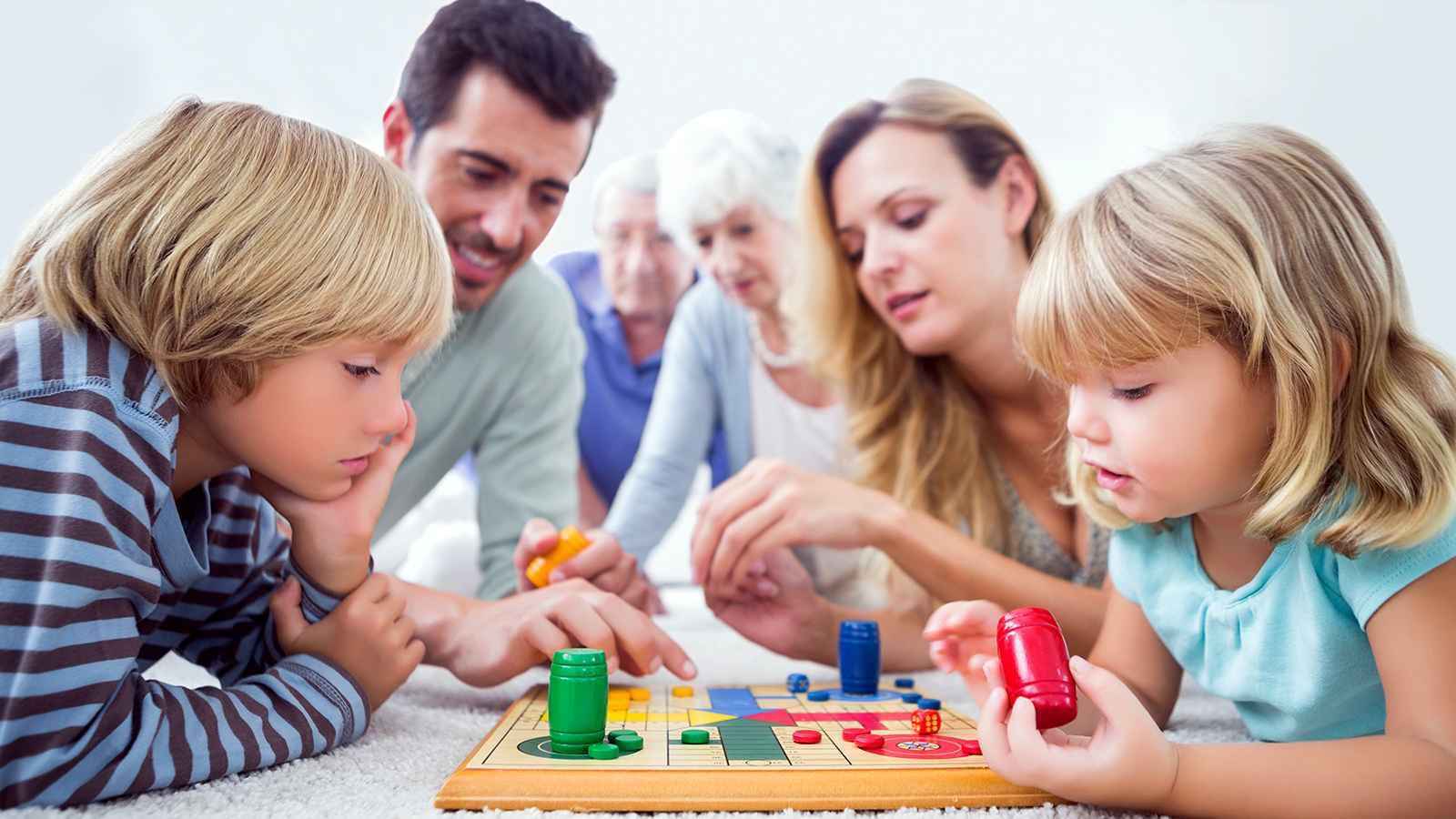
- Playing games with children is a very effective way to build strong bonds with them. It also helps your children relax. Parents are, in fact, their children's first teachers. Play is the best way to teach children the things you want them to learn. This is because play allows children to make a situation concrete and communicate it to you, or allows you to convey what you want to explain to them. Play helps children improve their social skills, develop their fine and gross motor skills, and advance their cognitive abilities. For example, drawing or playing with modelling clay will be effective in developing fine motor skills. Games that keep children physically active will be effective in developing gross motor skills. Play also helps children express their emotions and develop their creativity and problem-solving abilities. There are various types of play that support these areas of development. Some types of play seen in children aged 2–6:
Onlooker play: This is seen in children aged 1–3. Children watch others playing. They ask questions about what the other children are doing but do not take steps to join the play.
Parallel Play: This is seen between the ages of 1.5 and 2, when children stay beside one another but do not play the same game. They play independently side by side, but being next to one another is now a sign of wanting to be around their peers. Possessiveness over toys is common in this age group.
Associative Play: When children reach the ages of 3–4, they begin to turn more towards their friends than towards children in general. During this period, their relationships with peers help them begin to understand more clearly what they should and should not do during play. They learn to share. Their problem-solving skills improve. Children have shared goals. There are no rules or boundaries in the game. The aim is simply to play with the same toys. Children may exchange toys with one another. They are seen to be more sociable.
Constructive Play: In this type of play, children create things. Babies putting something they see for the first time into their mouths is also part of this type of play. They explore the taste and texture of toys to understand how they feel. Building with blocks, playing in sand and drawing are also among the forms of play seen from the age of two that express a child's creativity.
Expressive Play: This type of play helps children express their emotions. Materials such as pencils, clay and sponges for making pictures, or a punching bag and musical instruments, can be used.
Fantasy Play: In this type of play, children are seen trying out new roles and experimenting. Games in which they take on adult roles are an example. This type of play helps children develop abstract thinking and expand their imagination.
Cooperative Play: This type of play can be said to emerge from the age of four. Children stop playing on their own and follow a game created by another child and its rules. Team sports can also be examples of this type of play. The group keeps the game going, and everyone follows the rules. This type of play helps children accept that there are rules everyone must follow.
Clinical Psychologist Yağmur Yarlılar
**REFERENCES:
**– Anderson-McNamee, J. K. , & Bailey, S. J. (2010). The importance of play in early childhood development. Montana State University Extension, 4 (10), 1-4.
– Effective Family Communication – Dr. Thomas Gordon
– Practical Applications in Effective Family Communication Training – Dr. Thomas Gordon