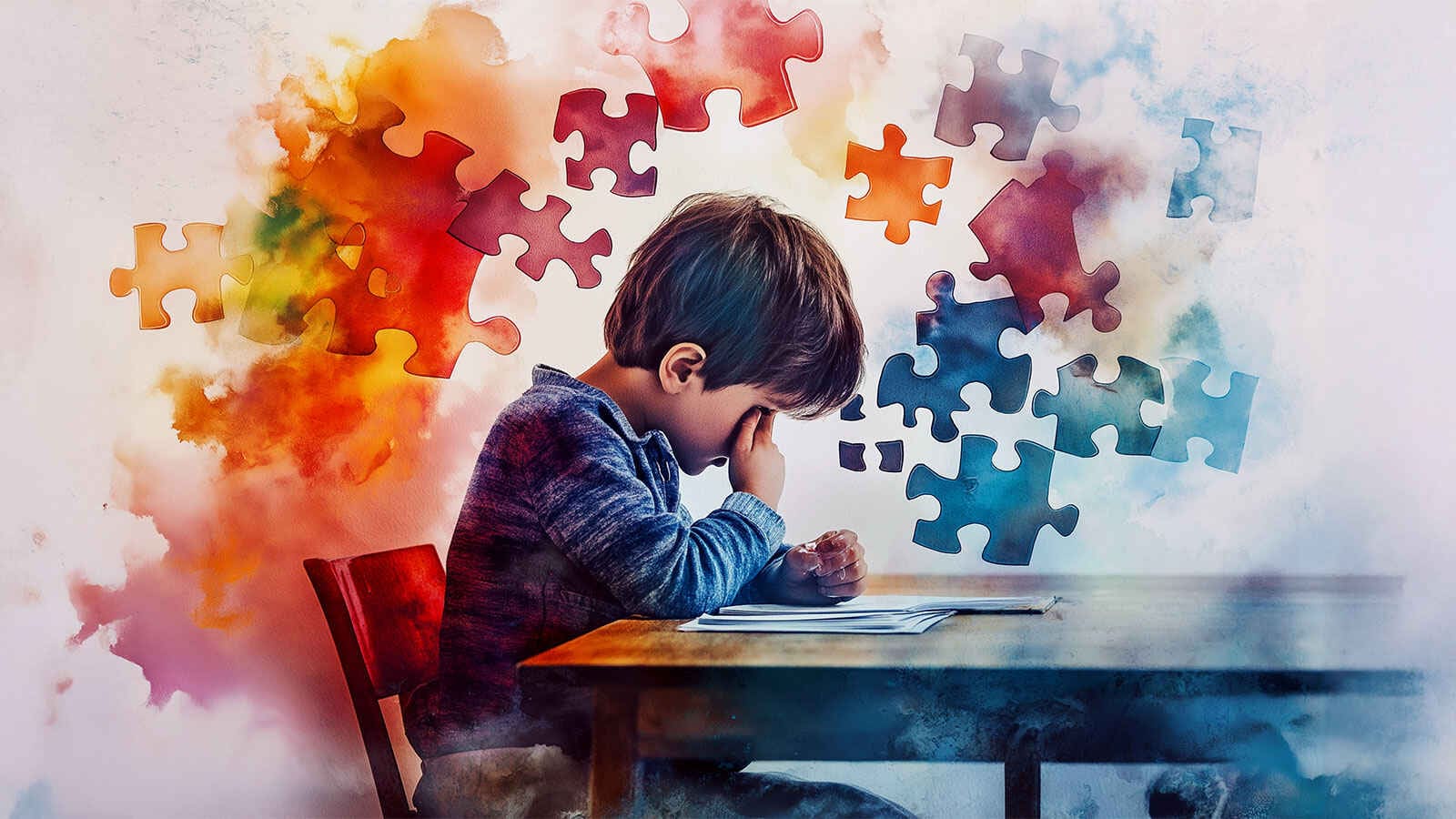
Autism spectrum disorder (ASD) is a neurodevelopmental disorder in which individuals experience difficulties with social communication, interaction and behavior.
Symptoms of autism spectrum disorder occur across a broad spectrum, ranging from mild to more severe.
What are the symptoms of autism?
- Difficulties with social communication: Inability to make eye contact, inability to respond to emotional expressions, difficulties with social skills
- Behavioral difficulties: Repetitive behaviors, excessive adherence to certain routines, a restricted range of interests
- Sensory sensitivity: Overreacting or underreacting to sensory stimuli such as sound, light and touch
Is there a treatment for autism?
Unfortunately, there is no specific treatment for autism. However, early diagnosis plays a very important role in enabling intervention in the relevant areas.
What approaches are used to treat autism?
Although there is currently no specific treatment for autism, it is known that autism has a more favorable course and symptoms are milder when behavioral therapies, speech and language therapy, family psychoeducation, play therapy and symptomatic treatment for co-occurring mental health problems are started early.
Early diagnosis and effective interventions help individuals reach their full potential.
What causes autism?
Despite extensive completed and ongoing research into autism, it remains a neurodevelopmental disorder whose cause has not yet been established. Research suggests that it arises from an interaction between genetic and environmental factors.
Some family studies of autism have shown that it is more likely to occur within families and that certain genes may increase the risk of autism.
Differences in the development of certain structures during brain development are also thought to potentially increase the risk of autism.
In addition, although this has not been fully established, certain environmental exposures, infections and medications during pregnancy are thought to be possible contributing factors.
Up to what age can autism be diagnosed?
Autism is usually diagnosed between the ages of 2-3. However, some symptoms may appear earlier.
How is autism diagnosed?
There is no specific test for diagnosing autism. A specialist team makes the diagnosis following assessments over time that include observation, family interviews, a detailed examination and a medical history. Some screening and developmental tests are also used in clinical practice to support the assessment.
Does special education help with autism?
Special education for individuals with autism should be personalized and specifically planned around their developmental needs. Special education helps develop social, emotional, communication and behavioral skills as well as academic skills.
Family education, speech and language therapy and play therapy provide substantial support for progress in this neurodevelopmental disorder.
Does TMS treatment help with autism?
Research into the effectiveness of TMS treatment for autism is ongoing worldwide.
TMS aims to increase or decrease nerve cell activity by delivering magnetic pulses to specific areas of the brain.
Benefits that may be observed with TMS treatment in autism
Research shows that TMS may have positive effects on social communication and interaction. It has also been shown that it may improve emotional regulation skills, help reduce certain behavioral problems, increase eye contact, reduce negativistic attitudes and help individuals develop imitation and repetition skills.
More research and long-term studies are needed on the potential benefits of TMS in this area.