The prevalence of major depressive disorder in adolescence is reported to be 14–20%. Inadequate treatment of depression during this period is a global public health problem that brings serious consequences, including frequent recurrence, substantial impairment in social/economic functioning, the development of co-occurring disorders, vulnerability to substance use, teenage pregnancies and an increased risk of suicide.
Currently, psychotherapy and selective serotonin reuptake inhibitors are among the first-line treatments for adolescent depression. However, current treatment approaches, such as psychotherapy, pharmacotherapy or combination therapy, often have suboptimal outcomes and uncertain safety profiles in adolescents. TMS Treatment
Transcranial magnetic stimulation (TMS) is increasingly recognised as an investigational treatment for adolescents with depression who do not respond to standard treatments such as cognitive behavioural therapy and SSRIs.
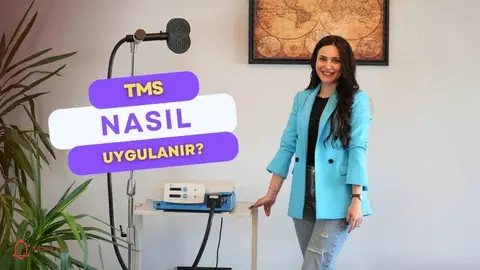
Treatment with TMS involves stimulating cortical neurons with magnetic pulses and stimulating cortical neurons. The table below summarises the TMS protocols used in adolescents and response rates for depressive symptoms. These findings suggest that TMS is promising for treating depression in adolescents who respond inadequately to standard treatments and has a safety profile similar to that in adults.
In conclusion, brain stimulation methods such as transcranial magnetic stimulation have the potential to provide lasting, brain-based interventions for adolescents with depression.
Current data suggest that treatment with transcranial magnetic stimulation may reverse the biological imbalances seen in depression and the pathophysiological changes in relevant brain regions (in cortical GABAergic and glutamatergic neural circuits). Research on transcranial magnetic stimulation in adolescents is still at an early stage, and larger, more extensive and longer-term studies are needed.
Table 1
Summary of Therapeutic TMS Studies for Adolescent Depression
| References | N | Mean Age (yrs) | Frequency | Intensity | Location | Clinical Outcome |
|---|---|---|---|---|---|---|
| Walter et al. 2001 | 4 | 16 | 1–10 Hz (variable) | 90–110% | LDLPFC | 2 responders (one non-responder had bipolar depression) |
| Loo et al. 2006 | 2 | 16 | 10 Hz | 110% | LDLPFC | 2 responders |
| Bloch et al. 2008 | 9 | 17 | 10 Hz | 80% | LDLPFC | 3 responders |
| 1 partial responder | ||||||
| Wall et al. 2011 | 8 | 16 | 10 Hz | 120% | LDLPFC | 6 responders |
| Mayer et al. 2012 (3 year follow-up from Bloch et al. 2008 study) | 8 | 17 | 10 Hz | 80% | LDLPFC | Improvement in depressive symptoms was durable at follow-up |
| Le et al. 2013 | 25 | 11 | 1 Hz | 110% | SMA | Group level improvement in depressive symptoms |
| Yang et al. 2014 | 6 | 18 | 10 Hz | 120% | LDLPFC | 4 responders |
| Wall et al. 2016 | 10 | 15 | 10 Hz | 120% | LDLPFC | 6 responders |
| Farzan et al. 2017 | 16 | 21 | iTBS and cTBS | 80% | LDLPFC (iTBS) | |
| RDLPFC (cTBS) | 4 responders | |||||
| 9 partial responders | ||||||
| MacMaster et al. 2018 | 32 | 17 | 10 Hz | 120% | LDLPFC | 18 responders |
cTBS: continuous theta burst, Hz: hertz, iTBS: intermittent theta burst, LDLPFC: Left Dorsolateral Prefrontal Cortex, RDLPFC: Right Dorsolateral Prefrontal Cortex, SMA: Supplementary Motor Area